

low-effort things that are actually good for your nervous system

sometimes, the nervous system needs the lights lowered and everyone to stop asking questions for twenty minutes.
this is the part modern wellness tends to make unnecessarily complicated. regulation starts sounding like a project with equipment, subscriptions, perfect routines, morning sunlight, protein goals, breathwork protocols, supplements, and the emotional pressure to become a person who owns matching glass containers. some of those things can help, of course, but the body often responds to much simpler cues with fewer demands at the same time.

the useful question maybe wrongly disguised and sound like “how do i become calm?” because calm can feel too far away when the day has been loud, the inbox has been rude, and life has needed something from you every seven minutes. a better question might be: what would make my body feel less under attack right now? that is where low-effort regulation begins, as a series of small signals that tell the body it can stop bracing quite so hard.
1. a warm bath
a warm bath is almost suspiciously simple, which is probably why people keep trying to rebrand it with a full emotional thesis paired with salts and playlists. the basic version already does plenty. warm water changes the body’s sensory environment, softens muscle tension, and creates a rare situation in which nobody can reasonably expect you to multitask unless they are deeply committed to being the villain. try to give the body one clear message: nothing needs to be solved for the next fifteen minutes.
2. an empty calendar
an empty calendar can feel almost illegal if your nervous system has been trained to associate free time with waste. the modern week has a way of filling itself with plans that seem small individually and exhausting collectively. one coffee date, appointment, just one call, and suddenly your body is living inside a relay race designed by people who underestimate transitions. a blank stretch of time gives the system room to exhale. it lets the mind stop pre-loading the next demand before the current moment has even finished.

3. dim lighting
harsh light has a talent for making ordinary life feel like an interrogation. dim lighting, on the other hand, tells the body the day is lowering its voice. lamps instead of overhead lights. a softer room after sunset. a bedroom that does not look like a dentist’s office with pillows. the nervous system reads light as information, and evening light matters more than people admit. lowering the brightness is a small way of helping the body understand that it is no longer required to perform alertness at full volume.
4. time in nature
nature does not need to be a mountain or a forest with emotional credibility. a patch of grass, a balcony plant, the ocean, a park, a tree-lined street, even looking at the sky for longer than three seconds can change the texture of a day. the nervous system likes reminders that the world is larger than the room where you keep overthinking. something about leaves moving, water repeating itself, birds behaving with great personal conviction, and light changing without needing your input can return the body to a less clenched state.

5. yin yoga
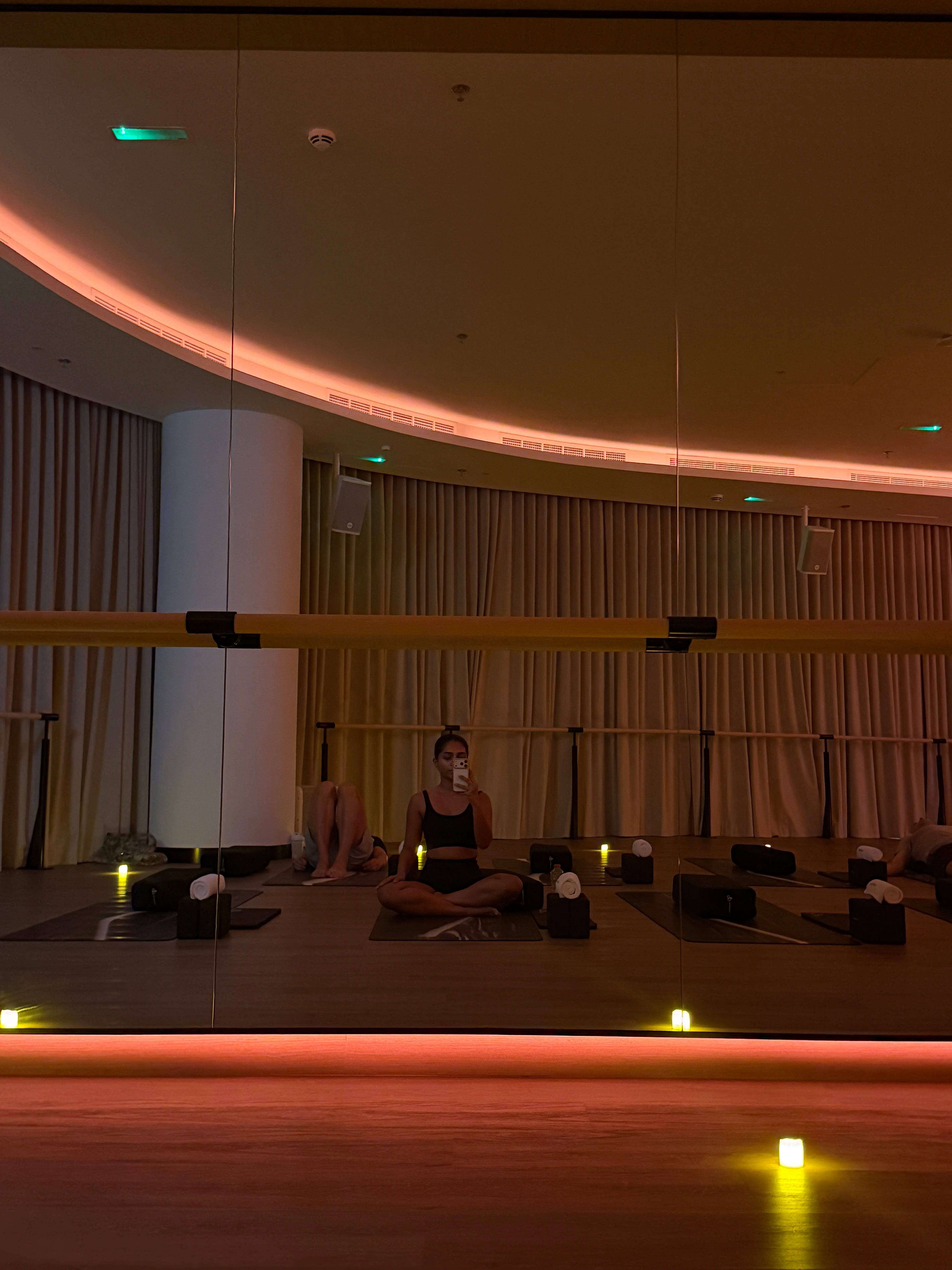
yin yoga is useful because it asks so little performance from the body. without speed, achievement or to become the flexible woman in the front row who appears to have been assembled from silk and discipline. the practice is slow enough that the nervous system has time to notice it is being treated differently. long holds can feel uncomfortable at first, especially for people who are used to rushing through sensation, but that is part of the value. the body learns that stillness means support. i have started practicing yin yoga since more than a month in the middle of moving, having a teething toddler and running milk and cookies. it was counterintuitive but due to the intense nature of my days, i decided to take 45mins out for regulation that helped me show up as a regulated writer, mom and felt more at home in my own mind.
6. eating something steady before the mood becomes a personality
many emotional spirals have been given far too much psychological importance when the body was simply underfed. a proper snack or meal can be one of the least glamorous and most effective nervous system supports. blood sugar dips make everything feel more personal. suddenly a mildly annoying message becomes proof that life is impossible. eating something with enough substance to actually land in the body can reduce the sense of emergency before the mind writes a novel about it.
7. a walk with no audio
a walk becomes very different when it is not turned into a podcast vehicle. sometimes the body needs movement without more voices entering the mind with just feet, air, and the slow return of your own thoughts. at first it may feel boring. then the brain starts emptying itself. the nervous system often settles when movement is paired with less input rather than more.
8. putting the phone in another room
the phone is a small rectangle of possible demands. even when nobody is messaging, the possibility is enough to keep the body slightly available. moving it to another room for a short stretch can feel oddly relieving because the nervous system no longer has to remain on call for the entire internet. start with twenty minutes if anything more feels unreasonable. a little distance from the phone can create a surprising amount of distance from the feeling that everything needs your attention.

9. repetitive domestic tasks
folding laundry, chopping vegetables, watering plants, wiping a counter, making the bed, arranging a small corner. these tasks are easy to resent because they never stay done, but they can also help the body return to itself when approached without rushing. repetition gives the mind a track to run on. the hands move, the environment shifts slightly, and the day becomes less abstract. the trick is to choose one contained task rather than entering the entire house with the energy of a disappointed landlord. i love watching creators like hannah c. on tiktok and hamimoommy on youtube when i lose motivation.
10. one low-stakes human contact
the nervous system is not designed to regulate entirely alone, no matter how convincing your notes app may be. a short voice note, a ten-minute call, a message to someone safe, sitting near a person who does not require performance, even petting a dog who has no career goals and therefore excellent priorities. low-stakes connection reminds the body that support exists without turning the evening into an emotional summit. the right kind of contact can lower internal noise simply because you are no longer holding the whole day by yourself.

none of these things require a life overhaul, which is exactly why they work inside a real life. the nervous system does not always need a grand healing plan.
regulation becomes more possible when care stops being treated like a reward for coping beautifully. the body needs cues of safety before it has earned them. especially then.
The simple gifts are not hacks, but rather things that have been with us since the beginning, available to us now - thank you for sharing
Put the phone in another room! I put my phone to bed in my office every night. I try and do this a couple hours before I climb into bed myself. So far, I haven't missed an urgent message or notification. Instead, I've devoured more books, slept better, and have eliminated any reason to borrow trouble that the day no longer needs.