

the courage to create badly

i have been thinking about how we’ve all become terrified of doing things poorly and not in the way people usually talk about perfectionism where someone confesses they spent three hours choosing the right filter for an instagram photo and everyone nods knowingly. i mean something deeper and more paralyzing, something that’s infected the way we approach anything that might be considered creative or expressive. we’ve arrived at this strange cultural midpoint where the gap between “i have an idea” because “i execute that idea in a way that meets my internal standards” has become so vast that most of us just never bother starting. we’ve convinced ourselves that if we can’t do something well—not just competently, but well, like algorithm-friendly well, like viral-worthy well—then there’s no point in doing it at all.
if reading together sounds grounding, there’s a free milk and cookies book club over on fable. it’s a cozy space, and you’re welcome anytime

the other day i was scrolling through youtube trying to find a tutorial on how to make sourdough bread, which is a thing i’ve been telling myself i’ll learn for approximately two years now, and i noticed that every single video in my recommended feed had at least a hundred thousand views. the algorithm had decided that only popular tutorials were worth showing me, which meant that only people who were already good at explaining things, already charismatic on camera, already producing professional-level content, deserved my attention. there were probably thousands of people who had uploaded their own attempts at sourdough tutorials, people who were genuinely knowledgeable but awkward on camera, or people who were still figuring it out themselves and documenting the process, but i would never see those videos. they’d been buried under the weight of optimization, hidden away where imperfect things go to die while getting seven views from the creator’s immediate family.
this is what the internet has done to us, really. it’s created this illusion that everything worth doing has already been done by someone more talented, more polished, more equipped than we could ever be. every niche has been filled by someone with better lighting and a more compelling personal brand. every recipe has been perfected by someone with a food blog and professional photography. every opinion has been articulated more eloquently by someone with a substack and ten thousand subscribers. the bar for entry has become simultaneously lower and impossibly higher—technically anyone can post anything, but the ambient standard of quality has been elevated to the point where anything that doesn’t meet that standard feels like an embarrassment rather than a contribution.
i’ve noticed this thing people do when they show you something they’ve made, how they immediately undercut it before you’ve even had a chance to form an opinion. someone will send you a photograph they took and the message will say “this is probably terrible but” or they’ll play you a song they wrote and preface it with “i know this isn’t very good” or they’ll share a recipe they developed and apologize in advance for how it turned out. the apology comes before anyone has read a single word they’ve written, before anyone has tasted the food or before anyone has heard the melody. they’re preemptively defending themselves against a judgment that hasn’t been made yet, trying to lower expectations so that when they inevitably reveal themselves to be less than brilliant, the disappointment will be cushioned. what strikes me is how much energy this takes, this constant self-deprecation, this performance of humility that’s actually a shield against criticism. they’re so busy explaining why their work won’t be good that they never get around to actually making it good, or even just making it.
the thing is, being bad at something is actually a prerequisite for being good at it, which is so obvious that it sounds stupid to say out loud, but we’ve somehow collectively forgotten this. you cannot become a decent writer without writing a lot of garbage first or you cannot become a competent cook without burning things and oversalting things and combining ingredients that have no business being in the same pan together; you cannot become a skilled photographer without taking thousands of blurry, poorly composed photos that you’ll never show anyone. the bad work is not a detour around the good work but the path directly through it. every person whose work you admire has a graveyard of failed attempts behind them, projects that went nowhere, ideas that didn’t pan out, experiments that taught them what not to do. the difference is that they kept going anyway.
but we’ve built a culture that only wants to see the highlight reel, the finished product, the success story with all the struggle edited out. we follow people on social media who show us their beautiful homes and their perfect pastries and their enviable vacations, and we see none of the mess that preceded any of it. we don’t see the three cakes that collapsed before the fourth one turned out instagram-worthy. nor do we see the credit card debt or the fights with contractors or the anxiety attacks in airport bathrooms. we just see the end result, polished and filtered and presented in the best possible light, and we internalize the idea that this is what normal looks like, that everyone else is just effortlessly excelling at life while we’re stumbling around trying to figure out how to properly fold a fitted sheet.
i’ve noticed this in my own creative life, the way i’ve started to self-censor before i’ve even begun. i’ll have an idea for an essay or a project and immediately my brain starts running through all the reasons it won’t work: someone has definitely written about this before, someone has definitely done it better, it’s not original enough or interesting enough or urgent enough to justify adding more noise to an already oversaturated internet. i’ve killed more ideas in the planning stage than i’ve ever actually executed, and most of them died because i convinced myself they wouldn’t be good enough to matter. the bar i’ve set for myself is so high that it’s essentially a ceiling, and i’m trapped underneath it, unable to reach it but also unable to ignore it.
what we’ve lost is the capacity for amateurism in the true sense of the word, which comes from the latin “amator” meaning lover. an amateur is someone who does something for the love of it rather than for money or recognition or professional standing. an amateur woodworker makes furniture because they enjoy working with their hands and seeing raw materials transform into functional objects, not because they’re trying to launch an etsy store or compete with professional craftspeople. an amateur gardener grows tomatoes because they like the smell of tomato plants and the satisfaction of eating something they grew themselves, not because they’re trying to achieve instagram-worthy garden aesthetics or maximize their yield per square foot. the amateur operates in a space that’s been almost completely colonized by the professional, by the person who has monetized their hobby and turned their passion into a side hustle and learned to speak the language of personal branding.
there’s this pervasive idea now that if you’re going to spend time on something, you should be working toward mastery, toward expertise, toward some kind of external validation that justifies the hours you’ve put in. running has become training for marathons, cooking has become sourcing obscure ingredients from specialty stores and attempting recipes that require three days of advance prep, taking photos has become investing in expensive cameras and spending hours learning about aperture and ISO and composition rules.
everything has to be pursued with intensity and purpose, every hobby has to be optimized and improved and documented, every leisure activity has to produce some kind of demonstrable result.
i’m not against getting better at things or learning new skills or pushing yourself to improve. what concerns me is the way we’ve made improvement the only acceptable reason for doing something. the process itself, the experience of attempting something uncertain and difficult and potentially rewarding, has been devalued to the point of irrelevance. what we’re really after is the finished version of ourselves, the one who’s already figured it out, without having to live through all those months of fumbling with the basics and making things that look obviously amateur. we’d rather present the polished result than admit we’re still somewhere in the middle of a long and awkward learning curve.
my neighbor plays guitar in his balcony sometimes in the summer, and he’s truly terrible. his timing is off, he forgets chords halfway through songs, his voice cracks when he tries to hit high notes. the first time i heard him i genuinely thought he’d just started learning, but i found out later he’s been playing for fifteen years. he’s just bad at it. he’s practiced for over a decade and he’s still bad. and the thing is, he doesn’t care. he plays because he enjoys playing. he sits in his balcony with a coffee and works through the same handful of songs he’s been playing since college, and he’s perfectly content with his level of skill. he plays because he likes the feeling of the guitar in his hands and the way certain chord progressions sound when the sun is setting. getting better at it has nothing to do with why he keeps coming back to his balcony with that same beat-up guitar summer after summer.
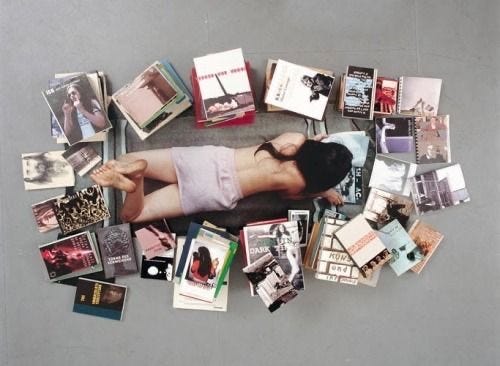
this is what i want back. this permission to be bad at things without it being a problem that needs solving. the understanding that doing something purely for the experience of doing it is enough, that you don’t need to monetize or optimize or publicize every activity you engage in, that sucking at something is actually a perfectly fine way to spend your time if you enjoy the process of sucking at it.
we’ve forgotten that most human activities throughout history were done by people who were just okay at them. the bread baked throughout history came from people who were just okay at baking, the songs sung were by people with average voices, the stories told were by people who would never be remembered for their storytelling. and that was fine because people still ate the bread and enjoyed the songs and listened to the stories. the bar for participation was just showing up and trying, not achieving some predetermined standard of excellence. culture was something everyone made together, messily and imperfectly, rather than something a talented few produced for everyone else to consume.
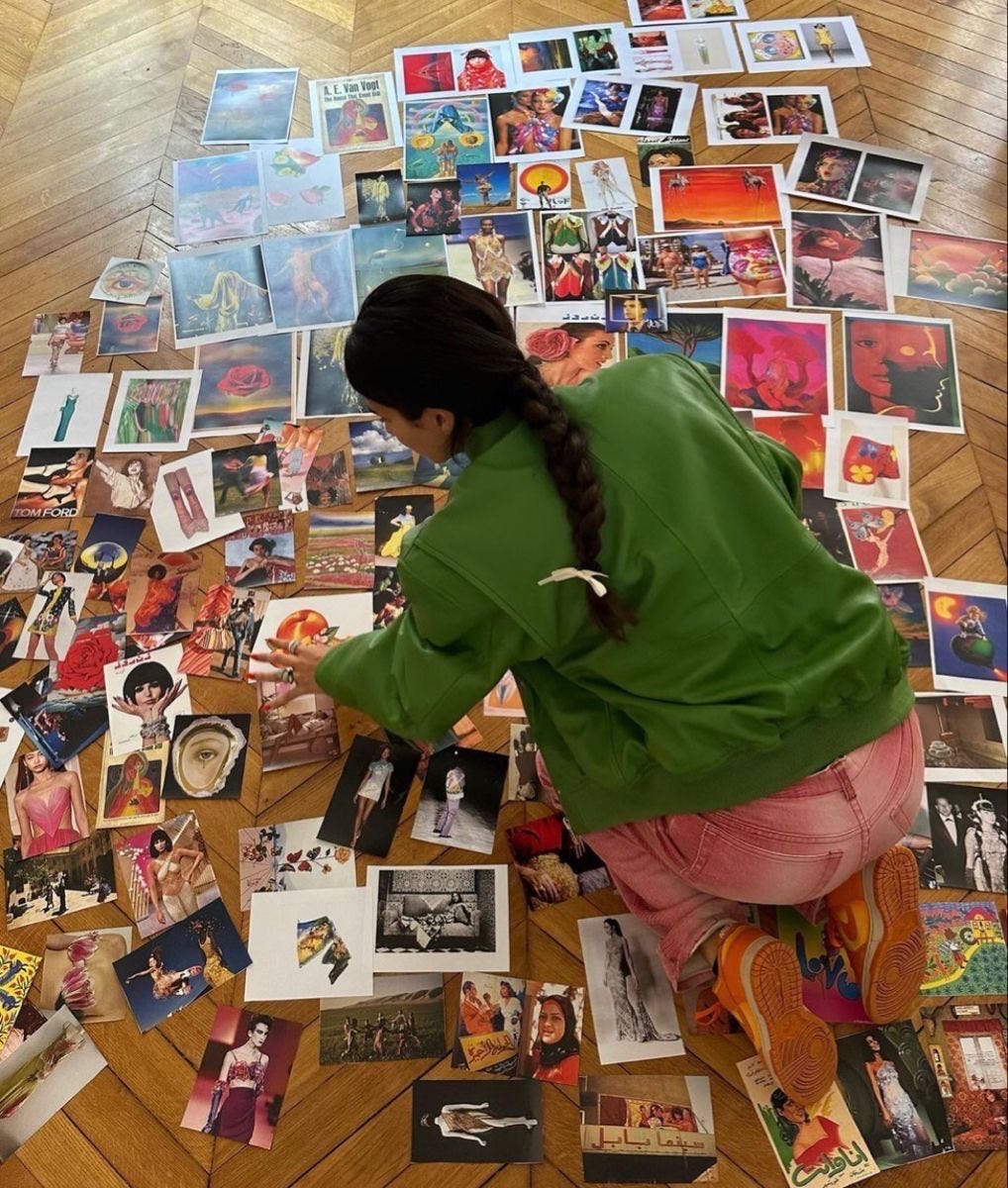
i think about this when i see people complain about how everything online feels the same now, how every instagram feed looks identical, how every personal essay follows the same structure, how every youtube video has the same editing style and pacing. we’ve professionalized amateur creativity to the point where there’s no room left for the weird, the rough, the unpolished. everything has to look like it was made by someone who knows what they’re doing, even if the person making it is doing it for the first time. we’ve traded authenticity for competence, spontaneity for consistency, experimentation for execution.
the irony is that the stuff we actually love, the stuff that sticks with us and feels meaningful and resonates on a deeper level, is often the stuff that’s a little rough around the edges. those early albums where bands were still trying to figure out who they were, debut novels written before anyone told the author about proper structure, home videos from when people just pointed the camera and hit record without worrying about lighting or editing. there’s a vitality to unpolished work that gets sanded away once people start worrying too much about how it will be received. the self-consciousness kills something essential, replaces it with a kind of calculated competence that’s impressive but cold.
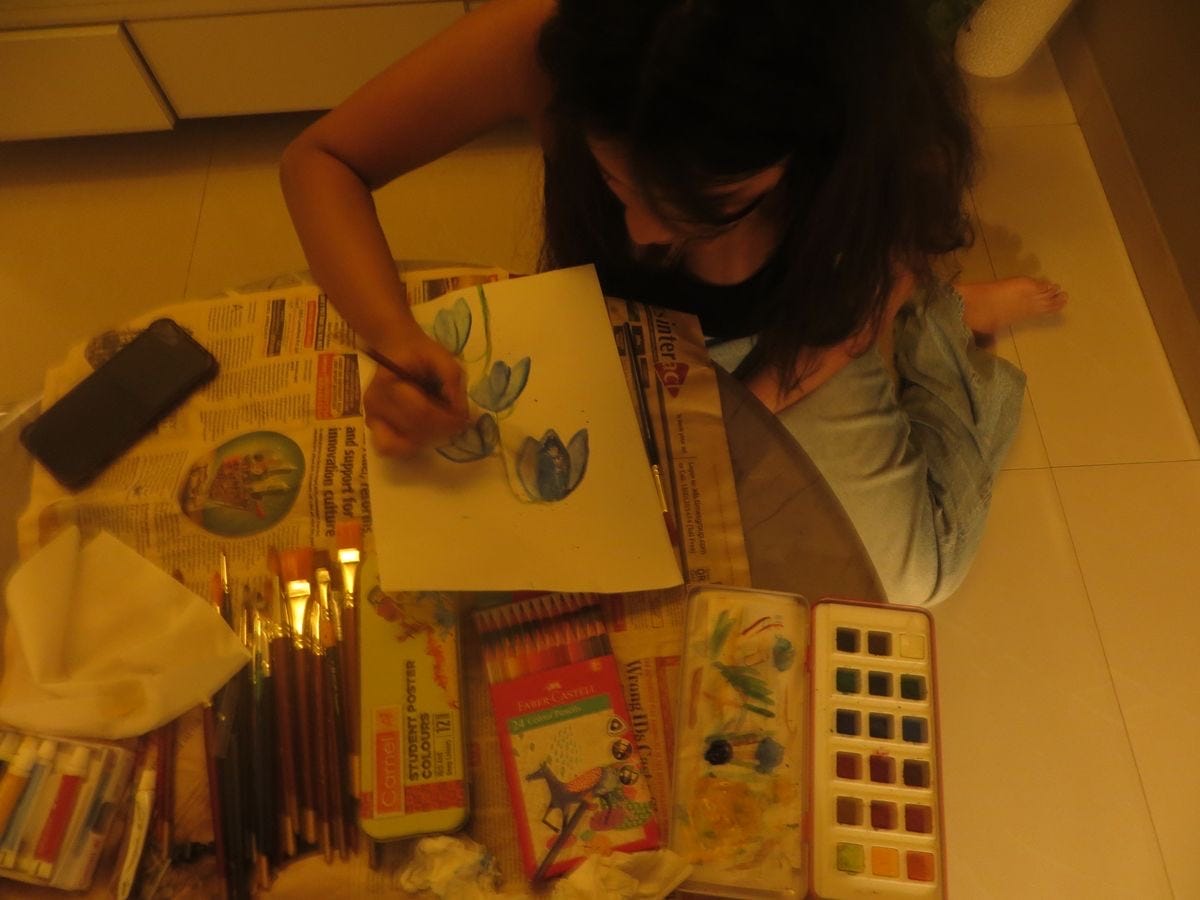
what i’m advocating for here is not lowering our standards or celebrating mediocrity or pretending that skill and craft don’t matter. i’m advocating for reclaiming the space to be a beginner, to be intermediate, to be permanently okay at something without it being a source of shame. i’m advocating for doing things badly as a radical act of self-permission, a refusal to let the fear of inadequacy prevent you from engaging with the world in creative and generative ways. i’m advocating for making the terrible first draft, the lopsided ceramic bowl, the out-of-tune song, the blurry photograph, the undercooked dinner, the awkward conversation, all of it, without needing it to be anything other than what it is: an attempt, an experiment, an experience.
the courage to create badly is actually the courage to create at all, to put something into the world without knowing if it’s any good, without certainty about how it will be received or the safety net of proven competence. it’s the willingness to risk embarrassment and failure and judgment for the slim possibility that you might make something interesting, or at least learn something in the process of trying. and choosing the vulnerability of sincere effort over the safety of never attempting anything you might fail at.
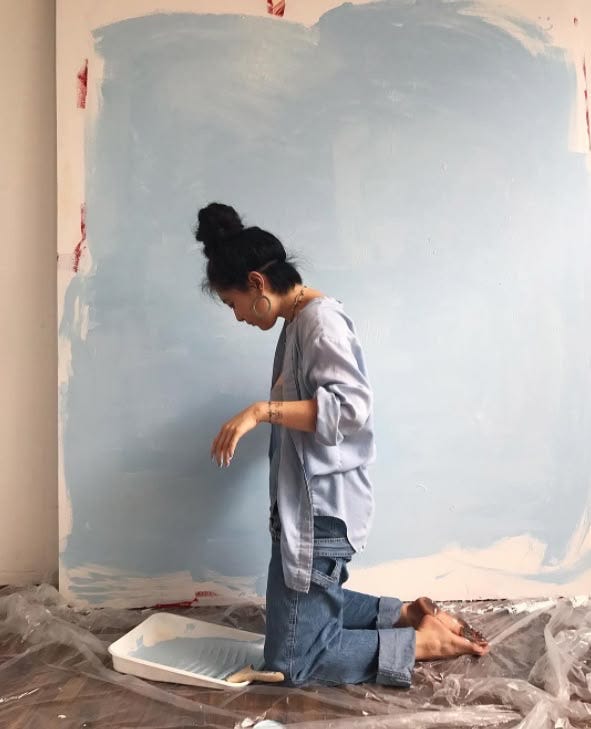
here’s what i’ve learned from the times i’ve let myself do things badly: nobody cares as much as you think they will. people are so consumed with their own self-consciousness, their own fear of being judged, their own internal standards and anxieties, that they barely notice when you’re stumbling through something. the audience you’re imagining: the critical crowd scrutinizing your every move, largely doesn’t exist. most people are either supportive of your attempts or completely indifferent to them, and the few who are genuinely judgmental are usually dealing with their own insecurities about not creating anything themselves.
the other thing i’ve learned is that being bad at something is actually more interesting than being artificially good at it. when you’re bad at something, you’re forced to be creative, to find workarounds, to develop your own weird methods that don’t appear in any tutorial or textbook. you’re not constrained by the proper way to do things because you don’t know what the proper way is yet. this is where actual originality lives, in the gap between what you’re trying to do and what you’re actually capable of doing. the struggle produces something that polished competence never could.
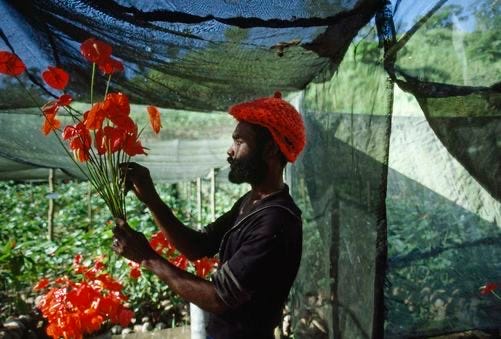
so go ahead and write the bad poem, make the lumpy pottery, take the poorly composed photograph, record the shaky video, cook the questionable meal, start the project you’ll likely never finish. do it all badly, enthusiastically, without apology or justification. do it because you want to see what happens, because you’re curious and because you have an afternoon to fill and you’d rather spend it making something than consuming something.
the world has enough polished content. what it needs is more people willing to be beginners, to be awkward, to be imperfect in public, people who create because they can’t help it, because the urge to make something is stronger than the fear of making something bad. what it needs is the courage to value the process over the product, the attempt over the outcome, the doing over the done.
start badly. stay bad if that’s where you end up. just start.
images via pinterest. creators, feel free to reach out for credit or removal.
Let's face it, the more we try to make something perfect, the more we lose focus and postpone the start.
Stop reading my mind! This is exactly what I needed to hear today as I continued to try and battle with my desire to start writing and my block to it all....